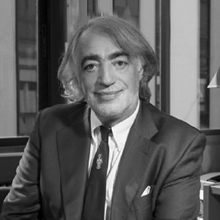
Orfeas Plakas-Primikyrios is studying in the field of Music Technology and Acoustics. As a musician, he has been part of various projects of different genres he helped with the radio spot and the editing of the videos for the event and is currently playing with the band Wish Upon A Star.
Orfeas has worked in TV news production at ERT. He co-produces the web radio show “Beerateia” that is aired on Spam Radio, webradio of the department of Communication, Media and Culture of Panteion University.
Antonis Gadaras is a second year student at the General Lyceum of Moudania. His love for learning extends to every field and he has obtained degrees in foreign languages and music. He enjoys Math and Science, and every year, he takes part in math competitions; in 2010 he won a silver medal.
Antonis has always been a lover of poetry; inspired by the poem “Oblivion” by Mavilis, he began writing his own sonnets. In 2010, his first sonnet entitled “Winter Melancholy” received first prize in the National Student Poetry and Literature Contest organized by the Panhellenic Literary Society; in 2011, three of his poems entitled “Euphoria and Fecundity,” “Nightmare” and “Supplication” won him top commendation from the Publishers Association of Northern Greece poetry contest
In 2011, together with his school’s debating team, he ranked first in the Debating program of the Ministry of Education; this year, he ranked third on the 15 Best Speakers nationwide list.
Antonis believes in the values of friendship, selflessness and humanitarianism; he is very social and always willing to help other people; some of his sonnets will be exhibited on the premises of the event.
Nikos Katsis was born in 1998 and lives in Zefyri, an area well known for its particular conditions. He went to the 4th primary school of Zefyri, and now attends the International School of Athens.
When he was in the fourth grade he created a blog as part of the “kseblogare” competition (http://katsis.wordpress.com), which stood out as one of the most remarkable of the competition. For this blog, he won an award from the Municipality of Zefyri, and Kathimerini’s “K” magazine devoted an article to him.
In the fifth grade, together with Dimitris Neofotistos, he participated in the Pan-Hellenic Robotics Competition, where they took first place. The following year he represented Greece in the World Robot Olympiad (WRO) in South Korea, in the primary school category.
In the sixth grade he was awarded prizes for his success in the Mathematical Olympiad by both the Mathematical Society and the municipality.
His interests are varied; he loves art and plays the violin (he has recently played a concerto for violin and piano at school); his other hobbies include painting and origami and other constructions. He likes puzzles and riddles (he solves Rubik’s cube in a record 45”). He also participates in sports.
Nikos intends to study electrical engineering, followed by post-graduate studies in bio engineer.
Nikoletta (Nicky) Stypidou was born in Athens on February 17 to parents who are both MENSA members; her giftedness has been evident since she was very little – in 2011, following in her parents’ footsteps, she passed the MENSA test. Although an excellent student in all subjects, she prefers math and science and artistic subjects. She speaks English and French, and her dream is to study in the Netherlands; her hobbies include photography, playing the guitar and reading, as well as dancing and making all kinds of things. Some of her photos will be exhibited on the premises of the event.
Panagiotis Chaldaios is a 16 year old student completing his high school studies at Moraitis private school in Athens where he has an academic scholarship. He is multilingual with an ability to speak English, German and Chinese in addition to his native Modern Greek. Panagiotis has a love for music and has been studying the violin since he was 4 years old. Today he is the youngest candidate in Greece for the practical Diploma in Violin Studies. He also plays the guitar. He is enrolled in the online Education Program for Gifted Children at Stanford University (U.S.A.) and has completed three courses in mathematics, two of them on scholarship. From the age of 6 he expressed the interest in martial arts, which is when he started training in Tae-Kwon-Do. He has acquired the black belt in both Tae-Kwon-Do and Tang-Soo-Do, along with several other achievements. Panagiotis has received achievement awards from the Mathematics Society of Greece and is currently preparing for the Hellenic Chemistry Society competitions (a full year younger than the other candidates). At Moraitis High School, he has been a member of the Photographic , Football , Basketball , Technological and Scientific Applications , Entrepreneurship and Chess Groups and he is the the head of the official photography team composed on purpose of all school events. Panagiotis is looking for an academic scholarship to study abroad, with his main career interests being chemistry & biology and/or engineering.
It is true that children with high intelligence are a small percentage that does not exceed 2% of the paediatric population. Some are gifted, other are talented, or simply intelligent. A lot of people admire these children and think that their parents are lucky to have them. Other people express their concerns and comment: “lonely, troubled, children? They might become obnoxious to their peers and this will make them unhappy”. There are even some who believe that the provision of special education programs in such cases could lead to the creation of privileged group of people with high intelligence. The issue has many dimensions and is even more complex if we consider that humanity owes a lot of scientific and social achievements to intelligent and gifted people. The science would not have progressed beyond the level of duplication of knowledge if geniuses like Newton, Copernikus, Galileo, Einstein and many others hadn’t dare first to conceive new ideas with their creative thinking. The persons who made us see the world differently were once children and many of them from an early age had already shown signs of their high intelligence and exceptional skills.
Like all of us, gifted & talented children also need to develop social skills and learn how to manage and express their emotional potential in order to be integrated effectively in the community. What, then, are the social and emotional needs of gifted & talented children, and what are the factors that may affect both their development and expression? All those who are actively involved with
gifted and talented children , that is parents, educators and peers, should try to provide an environment where such children will be able to understand apart of their academic and creative potential their social and emotional side and to fulfill their respective needs. In this effort we need to know that gifted & talented children are not a homogeneous group. There are gifted & talented children with learning difficulties, those that do not express their mental potential, especially in the classroom, those who belong to minority groups and others with sensory damage. There are even those who differ considerably in how they express a particular characteristic. Both parents and teachers should also not forget that while the non-parallel cognitive, affective and psychomotor development of gifted & talented children usually has a direct effect on their social behavior as well as the way they perceive and express their feelings. Furthermore, the state should provide these children with such educational services that would allow their multidimensional (academic, social, emotional) potential to find ground for expression.
In this talk we study the characteristics of students who have distinguished themselves in national and international mathematics competitions. For example, the incentives for participation, and the influence of external factors such as family, school, etc are examined. Furthermore, we establish that performance depends on the knowledge available from school or other sources, and on practice as well as talent – factors that operate differently in different areas of mathematics.
Also, proposals are discussed for a better and more efficient development of students’ talents; from all the above it is concluded that distinctions are the result of special talent and very good training and preparation, which in turn leads to the conclusion that talent without proper guidance does not bear fruit easily.
Drs. Green will analyze the 9 elements of their method for the understanding of the number concept by gifted students (background, 9 elements of construction of number sense) CAMMP-MATH (Comprehensive Applied Manipulative Mathematics Program).
Dr. Anna Athanasopoulou will present videos and photos (case studies) of the gifted students of the Socrates Academy charter school at Charlotte, North Carolina
The common feature of ingenious inventors, entrepreneurs, leaders and artists is Dyslexia, which is a Gift from God, but only when we know it is present and we treat it properly at an early stage. Instead, due to ignorance, we focus only on the Specific Learning Difficulty in writing, very slow reading, terrible misspelling, poor school performance and time mismanagement.
The ADHD syndrome manifests itself as a Behavioral and Self-control problem, with serious psycho-social and learning implications. It is made up of 3 subcategories: Attention Deficit, Impulsivity and Hyperactivity. Both Dyslexia and ADHD are due to biological and usually inherited causes, they mostly coexist, they last for life, they appear at a ratio of 4 boys to 1 girl, internationally, and they are accompanied by a special giftedness and ingenuity.
But when undetected and untreated, they unfortunately lead to serious secondary psycho-social problems such as low self-confidence and low self-esteem, and even depression. All this can be avoided/ reduced through early diagnosis or, even better, through pre-school prognosis, and with appropriate individualized treatment.
The talk will focus on the causes, the symptoms, the prognostic and diagnostic methods used internationally, and on the learning and psycho-social effects of dyslexia and ADHD. We will establish their relationship with giftedness and its biological origins.
The topic will be presented from the medical, psychological, educational and human perspective.
Each year teachers welcome a new group of students to their classrooms. Each teacher has the same thoughts of how will I try and meet the needs of my students this year. In this workshop teachers will explore the theory and practice of a differentiated classroom. First learning how to effectively lead a differentiated classroom and then focusing on the mechanics of managing a differentiated classroom. The inherent interdependence of leading and managing a differentiated classroom is at the very heart of 21st century education. This workshop will provide a toolbox of activities and teaching strategies that will help teachers organize their efforts and achieve their goals of working effectively in a differentiated classroom.
Objective: The realization that the traditional Greek class can be “used” to foster and develop the potential of all students.
Information: There is a framework that can be applied to the Greek educational system which is based on specific concepts already “in use” in “traditional” education but also in the different educational provisions for gifted children.
Experiential workshop: Subject to the number, grade and specialization of participants.
Aimed at: Primary and Secondary Education Teachers
Cases and examples of gifted children that have realized their potential, and the parameters that contribute to the balanced development of gifted children and the creative exploitation of their skills.
Τα Χαρισματικά Παιδιά και οι Ιδιαίτερες Ανάγκες τους
Όλοι οι άνθρωποι είναι διαφορετικοί. Ο καθένας μας έχει ιδιαιτερότητες, διαφορετικά ενδιαφέροντα, ιδιαίτερο τρόπο αντιμετώπισης και θεώρησης των πραγμάτων, έχει τα δυνατά του σημεία αλλά και τις αδυναμίες του. Αυτό είναι ένα αδιαμφισβήτητο γεγονός το οποίο γίνεται όλο και πιο προφανές όσο παρατηρούμε περιπτώσεις που αποκλίνουν περισσότερο από το στατιστικό μέσο όρο.
Δυστυχώς όμως το ελληνικό εκπαιδευτικό σύστημα, όπως και η πλειονότητα των λειτουργών που είναι υπεύθυνοι για την διαπαιδαγώγηση των νέων, δεν παρουσιάζουν έμπρακτα καμία πρόνοια για τα παιδιά που αποκλίνουν από το σύνηθες. Είναι ένα σύστημα άκαμπτο και ισοπεδωτικό που, με αιχμή τον υποχρεωτικό του χαρακτήρα, οδηγεί σε έναν εξαναγκασμό: Να χωρέσουν όλοι στο καλούπι του μέσου όρου. Πέρα από το κατά πόσο αυτό είναι ηθικά ορθό, πρέπει να κατανοήσουμε ότι, ειδικά στη δύσκολη συγκυρία που διανύει η Ελλάδα, η ελπίδα για το μέλλον είναι αυτά που έχουν οι νέοι να δώσουν πίσω στην κοινωνία. Με την προώθηση της χαρισματικότητας και δημιουργώντας τις κατάλληλες συνθήκες για την ανάπτυξη των δεξιοτήτων και της ιδιαιτερότητας του κάθε ατόμου, στηρίζουμε ουσιαστικά αυτούς που θα κλιθούν να στηρίξουν την Ελλάδα. Άνθρωποι που έχουν κάνει τη διαφορά με τη συνεισφορά τους στην κοινωνία, αλλά έχουν αποτελέσει και φάρους για την ανθρωπότητα, όπως ο Albert Einstein, θα είχαν χαθεί εάν δεν τύγχαναν ιδιαίτερης μεταχείρισης. Μιας μεταχείρισης που είχαν ανάγκη για να ξεδιπλώσουν τις ικανότητες τους και να μπορέσουν να ανθίσουν.

 Orfeas Plakas-Primikyrios is studying in the field of Music Technology and Acoustics. As a musician, he has been part of various projects of different genres he helped with the radio spot and the editing of the videos for the event and is currently playing with the band Wish Upon A Star.